

I’ve been in the oil and gas sector for over 25 years, and if there’s one truth that’s stayed with me, it’s this: accuracy is everything. Especially in Canada’s regulatory climate, where emissions reporting isn’t just paperwork—it’s a financial and reputational balancing act.
In the early 2000s, our biggest challenge was measurement integrity—meters not calibrated correctly, flow volumes estimated or reconciled months later, and reporting that often relied more on trust than traceability. Today, the problems haven’t gone away—they’ve evolved. Now it’s about integrating accurate oil and gas measurement with emissions compliance, carbon credit positioning, and operational sustainability. And when you get that wrong, it shows up on three fronts: audits, missed credit opportunities, and partner disputes.
The Shift from Emission Penalties to ROI Strategy
Regulations like Directive 060 and Alberta’s TIER program have reshaped how we think about GHGs. The old reactive posture—“wait until the regulator asks”—just doesn’t fly anymore. With third-party verification now common and offset markets maturing, we’re seeing real dollars tied to emission data quality.
That’s why GHG Consulting has become central to our work. It’s no longer just about reporting what’s coming out of the stack. It’s about designing a compliance strategy that includes emissions quantification protocols, audit resilience, and alignment with internal ESG goals.
I’ve seen operators leave six-figure value on the table simply because they didn’t have verifiable emissions data to support their participation in Canada’s carbon offset credits program. That’s where understanding the carbon credit price becomes essential—particularly for producers looking to turn reductions into commercial advantages.
What often gets overlooked is that these carbon credits are not one-size-fits-all. The quality and eligibility of a credit are highly dependent on your ability to prove permanence, additionality, and measurement rigor. If you’re relying on outdated practices, poor documentation, or assumptions, you’re not just leaving money on the table—you may be undermining the integrity of your entire emissions reporting system.
 Measurement: The Hidden ROI Engine
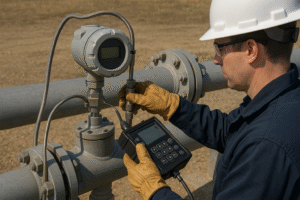
Most operations folks see metering as a necessary evil—something you do to avoid penalties or because EPAP tells you to. But when you look at it from a carbon strategy lens, gas measurement services and flow meter calibration services become cost-saving, ROI-driving tools.
I worked with a mid-sized producer last year who was flagged for recurring gas imbalance at three facilities. Turned out their flow meters hadn’t been calibrated properly in over 18 months. The fix—standardizing their calibration cycles—cost under $15,000 but helped them validate enough offsets to clear $200,000 in credits. Without accurate measurement, their carbon story would’ve collapsed under audit.
And the measurement burden doesn’t end with a calibration sticker. Alberta operators are expected to maintain traceability on flow meter performance, adjustment logs, and even site-specific deviation approvals. If you’re not actively managing those threads, you’re carrying audit risk whether you realize it or not.
Pain Points We Keep Seeing—and Fixing
If you’ve been in the field long enough, these challenges won’t surprise you:
-
Emissions data not aligning with reported fuel flows
-
Misconfigured meters sending bad data upstream
-
Facilities relying on outdated MARPs or EPAP plans that haven’t been reviewed in years
-
Teams overloaded with measurement tasks that don’t get closed out properly
-
Lost credits because offset projects weren’t verified in time
These aren’t new—but they are increasingly expensive. And they’re exactly what good Regulatory Compliance Consulting is built to address. Not by applying generic frameworks, but by helping operators tighten the loop between field operations, engineering, compliance, and carbon finance.
One client we supported had been unknowingly misreporting flare volumes due to a legacy configuration error. The measurement team had flagged it several times, but the compliance cycle never closed the loop. When the discrepancy triggered a third-party audit, they were forced to restate a full year’s worth of inventory. The fix? A cross-functional workflow that mapped out how Carbon Management Consulting integrates with regulatory tasks in real-time—not just during review season.
 Why Decarbonization Isn’t a Side Project Anymore
One of the most persistent misconceptions in this space is that compliance and Decarbonization Consulting only show up as costs. But after decades in this industry, I can tell you: when these programs are approached correctly, they deliver operational clarity and real return.
Most folks think decarbonization means reinventing your operations. It doesn’t. I’ve worked with operators who saved millions just by recognizing that their pneumatic controller replacements qualified for offsets. All it took was carbon management consulting support to document, verify, and monetize it.
Decarbonization done well doesn’t mean reducing production—it means reducing waste. Whether that’s fugitive methane, unmonetized vent volumes, or inconsistent data that prevents eligibility for credits, the goal is to find measurable reductions that align with business activity. It’s the exact reason the GHG Consulting industry exists—to turn regulatory pressure into measurable opportunity.
And Regulatory compliance consulting plays a parallel role—especially when you’re operating multiple facilities with legacy exemptions or inconsistent reporting standards. Having a third-party validate and systematize your MARPs and Directive 060 alignment can be the difference between a clean audit and a corrective action plan.
The Strategic Role of Compliance-Linked Measurement
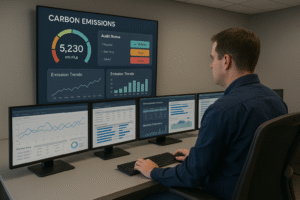
One area gaining traction right now is the use of smart validation logic in meter maintenance and inventory systems. Rather than reactive calibration cycles, operators are deploying systems that trend historical drift and alert maintenance teams before values hit regulatory thresholds. That’s not just better compliance—it’s active risk management.
Some of the most forward-thinking operators are going further—integrating emissions data from SCADA and mobile workflows directly into carbon planning dashboards. This is the convergence we’ve all been waiting for: measurement and carbon strategies under one roof, supported by credible, verifiable data.
Bringing It All Together
The companies that succeed in this next chapter of oil and gas in Canada won’t be the ones who check the most boxes—they’ll be the ones who build the most alignment between data, compliance, and value. When emissions reporting supports measurement integrity, and when carbon tracking ties back to credible flow rates, you’re not just compliant—you’re in control.